49. Cabecera noticia resultados 2025
SIGAUS promoted the circular economy in 2025 by transforming 137,000 tonnes of waste oil into new resources
The organisation recently submitted its official 2025 reports to Public Administration bodies, detailing the 137,557 tonnes of waste oil managed last year, a 4% increase on 2024, which equates to the total amount of waste generated. Of this amount, 100,110 tonnes were regenerated, far exceeding the legal target. This process enabled the production of new lubricants and fuel oil, as well as preventing the emission of around 87,000 tonnes of CO₂.
 29-04-2026
24. Parrafo noticia resultados 2025 (I)
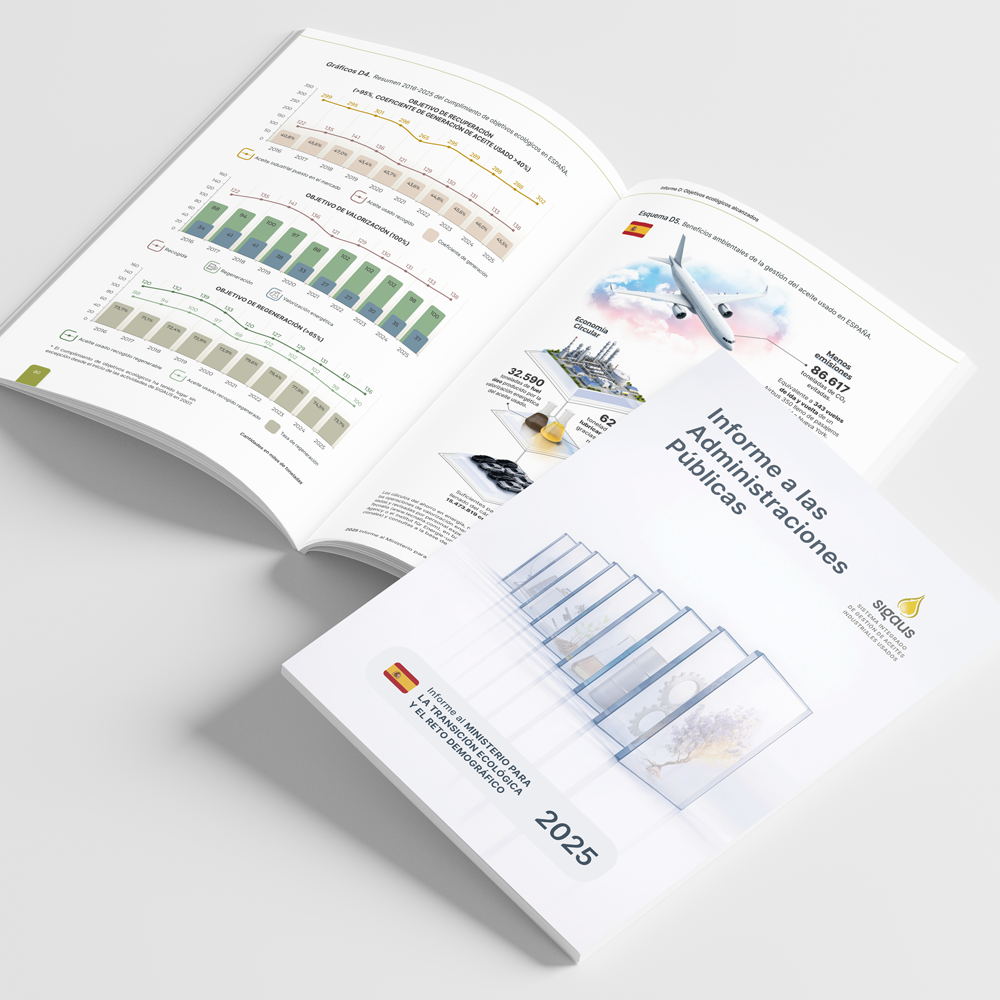
The management of industrial waste oil was once again a model for the circular economy in 2025. This is reflected in the official reports that SIGAUS submitted to the Ministry for Ecological Transition and the Demographic Challenge (MITERD), as well as to the competent bodies of the various autonomous communities, in which the organisation details the results of its work in 2025 and its compliance with the targets set by regulations.
Eduardo de Lecea, CEO of SIGAUS, says: “In 2026, we will celebrate 20 years of being a model for the circular economy in Spain and an international benchmark. The numbers for 2025 once again show that we have met our targets, with waste under strict control, all 100% of it collected and managed by us, and transformed into new resources that are highly beneficial to the economy. This is a success for our operational model, based on agreements with waste management companies, respect for the free market and the provision of a universal service. But above all, it is a success for all the stakeholders involved in the industrial oils value chain.”
As set out in these reports, SIGAUS member companies sold 302,217 tonnes of industrial oils in 2025, representing a 4.9% increase on 2024, the highest growth since the pandemic. Sales were driven mainly by the automotive sector, which accounted for 58% of the total volume and recorded growth of 6.6%, followed by industry, which accounted for 40% of the product (1.7% more than in 2024). Furthermore, 71% of the lubricant oil sold was of domestic origin, reflecting the importance of local production in the market.
In this regard, the report sets out the relative share of SIGAUS member companies in the overall market, based on an independent market study which showed their market share to be 85%, although, as the leading SEPRS in the industrial oils market, an additional 3% was assumed for estimated fraud.
32. Parrafo cita noticia resultados 2025
“
The 2025 data once again tells us of objectives met, of a very controlled waste, which we collect and manage 100%, and which we turn into new resources that are very useful for the economy.
„
The document provides extensive information on waste oil management: 153,993 gross tonnes of waste were collected from 65,846 collection points across Spain through 176,656 operations in 4,788 municipalities. This extensive coverage is made possible by a network that includes virtually all waste oil management companies in Spain, 166 companies and 204 facilities, and ensures operations at every stage of the process, from door-to-door collection to final treatment.
From waste to resource
After separating out water and other contaminants, the net amount of waste finally managed reached 137,557 tonnes, 3.8% more than in 2024. This amount is equivalent to the total waste generated, as environmental authorities – such as the United Nations Environment Programme – estimate that waste oil accounts for 40% by weight of the oil placed on the market.
100% of this recovered oil was utilised through various treatment processes. Almost three-quarters of the regenerable waste oil (73.67%) was sent for regeneration, the treatment method mandated by law, which involves extracting lubricant bases from the waste oil, exceeding the legal target by 8.7 percentage points. Taking into account the average regeneration yield, this treatment enabled the production of around 63,000 tonnes of new lubricants. The remainder of the collected waste oil was treated for subsequent use as fuel, enabling the production of over 32,000 tonnes of fuel oil.
24. Parrafo noticia resultados 2025 (2)
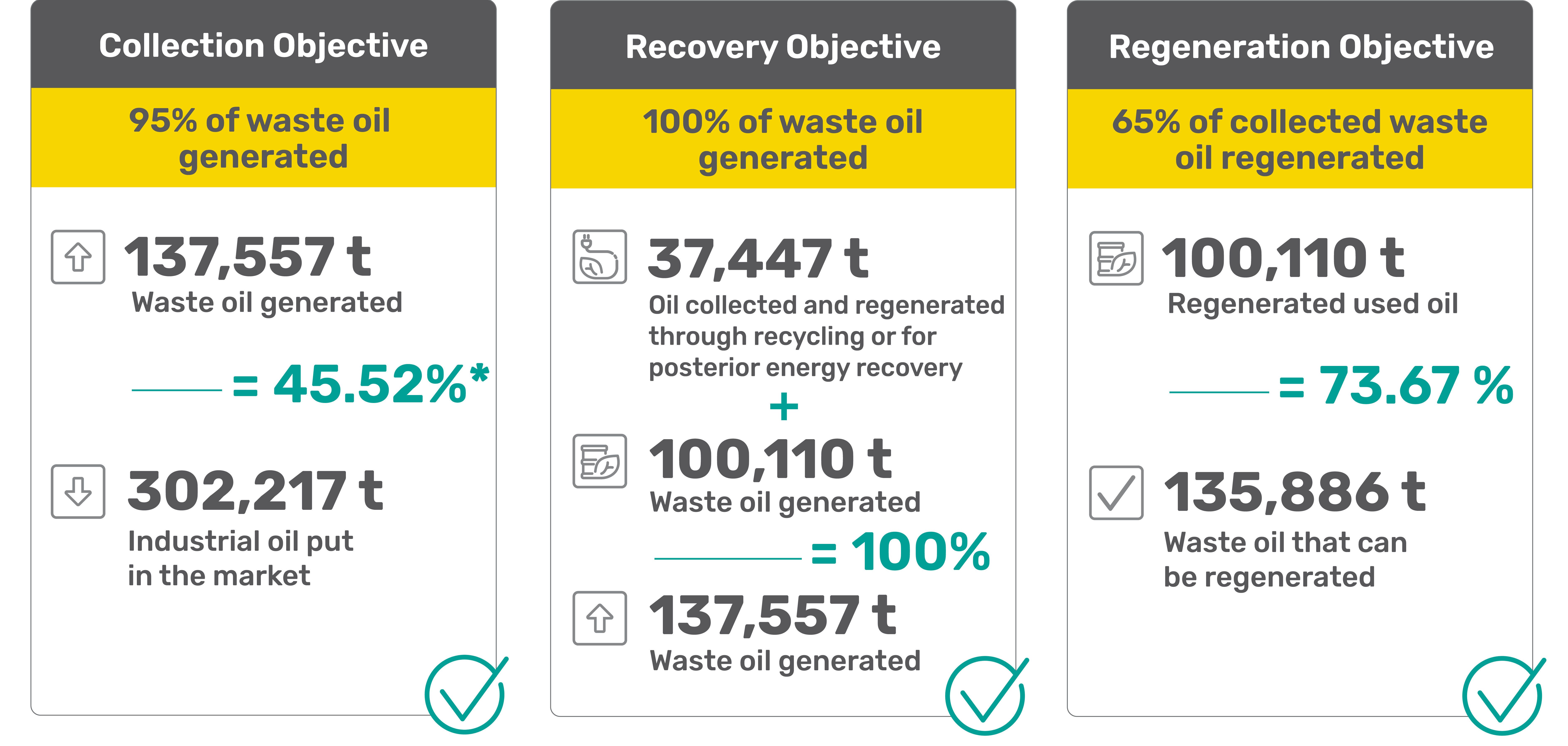
**A waste oil generation rate of over 40% ensures that the recycling/collection target will be met, as the authorities acknowledge that lubricant oil loses up to 60% of its volume when used.
Beyond the management figures, the results once again highlight the environmental and economic benefits achieved by transforming waste oil into new resources. Thus, the treatment of waste oil in 2025 prevented the emission of around 87,000 tonnes of CO₂, and saves large quantities of energy and raw materials, by replacing primary production processes used to obtain lubricant bases or fuel oil from crude oil.
The high level of traceability of the waste reflected in these reports is made possible by SIGAUS’s Technological Information System (TIS), which integrates the official documentation provided by waste management companies and enables the waste to be tracked from the source to the final treatment. This monitoring is reinforced by geographic analysis tools that improve the supervision and presentation of information, as demonstrated by the SIGAUS Waste Oil Observatory.
Transparency
The reports submitted by SIGAUS also include the progress report on the Corporate Prevention Plan in the field of industrial oils. Through this Plan, SIGAUS member companies declared a total of 666 actions in 2025 aimed at reducing the environmental footprint of industrial oils, including extending their service life, the use of regenerated bases and the application of micro-lubrication techniques, amongst others. In addition, these documents also detail the checks carried out by SIGAUS to verify the information provided by member companies and authorised management companies, thereby ensuring the quality and traceability of the data.