49. Cabecera noticia Enfinite
SIGAUS presents the challenges of new Spanish regulations on waste oils in the United States
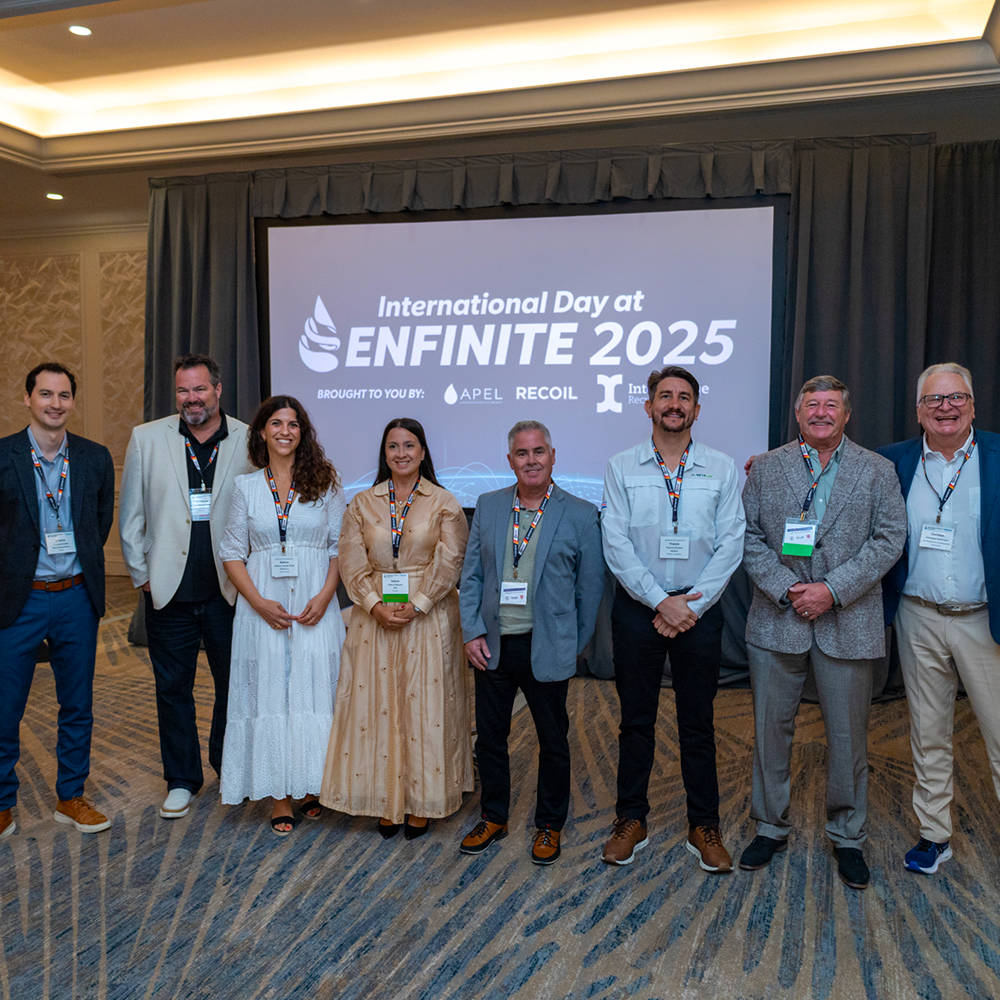
SIGAUS attended the Enfinite Conference & Trade Show 2025, an international gathering of the waste oil management industry held in Florida. There, SIGAUS’ Director of Communications and Public Relations, Ainhöa Lizarbe, participated in a round table discussion analysing the evolution of waste oil management in Spain, the milestones of the last year and the challenges posed by the new Spanish waste oil regulations, which are expected to be approved shortly.
 16-12-2025
24. Parrafo noticia Enfinite
SIGAUS’ participation in the conference organised by the US Industrial Liquid Recyclers Association (ENFINITE, formerly NORA) was part of International Day, in which organisations from around the world presented the situation regarding waste oil management in their respective markets.
During her speech, Ainhöa Lizarbe stressed that Spain is at a key moment in the management of industrial waste oils. After twenty years of the current legal framework, the new regulation will come into force with more demanding regeneration targets, which will increase to 75% in 2028, 80% in 2030 and 90% in 2035. This is a significant challenge, especially considering that regeneration is the most expensive treatment and that the availability of infrastructure, six plants in operation compared to almost thirty dedicated to fuel production, will require optimisation of waste logistics to ensure that these targets are met.
Despite this, Lizarbe highlighted a significant milestone: “The regeneration target set for 2028 has practically been achieved already, with a rate of 74.5% in 2024,” she said. However, she warned that the new regulatory scenario could require adjustments to funding to ensure compliance with the new targets set by the regulation.
32. Parrafo cita Enfinite
“
The regeneration target set for 2028 has practically been achieved already, with a rate of 74.5% in 2024.
„
Greater information transparency
The second major area of regulatory transformation focuses on transparency and strengthening the information provided to public administration bodies. The new regulation is expected to require a greater level of detail in both the information about placing products on the market and waste collection, as well as the preparation of a detailed economic report on the financing and expenditure of the SCRAP. “We already have one of the most comprehensive levels of information among Spanish systems,” explained Lizarbe, “but this law will force us to continue evolving in terms of traceability, verification mechanisms and reporting.”
During the round table discussion, Lizarbe also reflected on the role of regulation in the circular economy: “Regulation is the driving force behind change in industrial activities. It is the tool that enables more sustainable production, consumption and management,” she said. She recalled that in the field of lubricants, emissions requirements have driven the development of more sophisticated products that are better suited to modern engines and that, in the case of waste oil, stable regulation has made it possible to consolidate a highly effective management model.
Lizarbe also highlighted the importance of Extended Producer Responsibility (EPR) as the cornerstone of the European strategy to promote the circular economy. “Experience shows that centralised and specialised systems, with internalised costs, offer very good results, not only in waste management, but also in areas such as information, awareness-raising and eco-design.”